Why an Adjustment isn’t a Cure: How Sports Chiropractic Creates Lasting Results
June 29, 2026
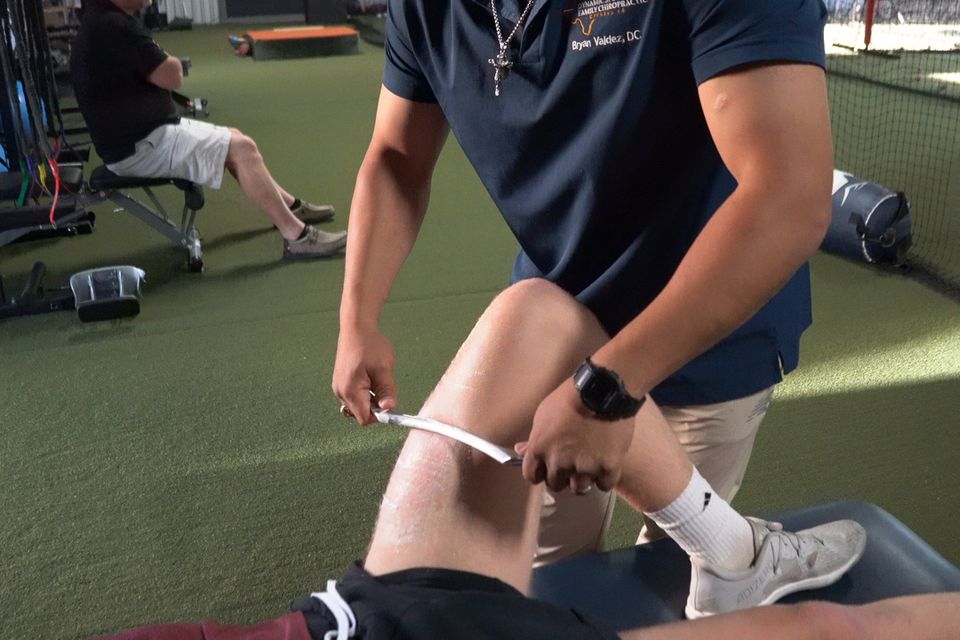
As a sports chiropractor and physiotherapist, one of the most common questions I hear is: "Should I get cupping or scraping?" The first thing I usually clarify is that what most people call "scraping" is actually known asInstrument-Assisted Soft Tissue Mobilization (IASTM). While "scraping" has become the popular term on social media, IASTM is the clinical name for a technique that uses specially designed stainless steel or polymer instruments to assess and treat soft tissues.
So, which is better: cupping or IASTM? The reality is that neither is inherently superior—they're simply different tools with different applications. The best choice depends on your injury, your goals, and what your body needs at that point in your recovery.
Cupping therapy uses negative pressure (suction) to lift the skin and underlying tissues rather than compressing them. Many athletes describe it as a feeling of decompression, particularly in muscles that feel tight, stiff, or overworked. The suction may help improve local circulation, decrease the sensation of muscle tightness, and temporarily improve range of motion. It's commonly used on larger muscle groups such as the back, shoulders, glutes, hamstrings, and calves. And yes—those circular marks are a normal response to the suction and usually fade within several days.
IASTM, on the other hand, uses handheld instruments to apply controlled pressure along muscles, tendons, ligaments, and fascia. One advantage of the tools is that they allow clinicians to both feel and treat changes in tissue texture with greater precision than using hands alone. IASTM is often incorporated into treatment for tendon pain, chronic muscle tightness, scar tissue after injury or surgery, and mobility restrictions. Many patients also find it helpful for improving movement before exercise or reducing stiffness afterward.
One of the biggest misconceptions surrounding both cupping and IASTM is that they "break up scar tissue," "release adhesions," or permanently change fascia. While these explanations are still common online, current research doesn't strongly support those claims. Instead, the benefits appear to be related more to how these treatments influence the nervous system, pain sensitivity, circulation, and your body's tolerance to movement. In other words, they can help you feel and move better, but they're not physically remodeling your tissues in the dramatic way they're often advertised.
That doesn't mean these techniques aren't valuable—they absolutely can be. They can provide meaningful short-term pain relief, improve mobility, and make it easier to perform the exercises that actually create long-term change. But it's important to recognize that soft tissue therapy is just one piece of the puzzle.
In my practice, I rarely use cupping or IASTM as standalone treatments. Instead, I incorporate them into a comprehensive rehabilitation plan that includes strength training, mobility work, load management, and movement retraining. Soft tissue techniques can help create a window of opportunity where movement feels easier and less painful, allowing you to make the most of your rehabilitation.
So, should you choose cupping or IASTM? There's no one-size-fits-all answer. Some conditions respond better to one than the other, and sometimes neither is necessary. The most effective treatment isn't determined by the tool—it's determined by choosing the right intervention at the right time and combining it with an evidence-informed exercise program.
At the end of the day, recovery isn't about chasing the latest trend or finding a "magic" treatment. Whether it's cupping, IASTM, hands-on therapy, or exercise, the goal is always the same: helping you move better, recover faster, and get back to doing what you love.